
START HERE. POST 0: The Day I Stopped Dying and Started Digging
Nobody tells you what comes after you survive.

Everyone thinks the hard part is the flatlining.
It isn’t. The hard part is the Tuesday after, when nobody’s monitoring your heart rate anymore and you have to figure out, completely unsupervised, what a person does with a life they weren’t supposed to get back.
But I’m getting ahead of myself. Let me tell you about the hallway.
The Quiet Before the Flatline
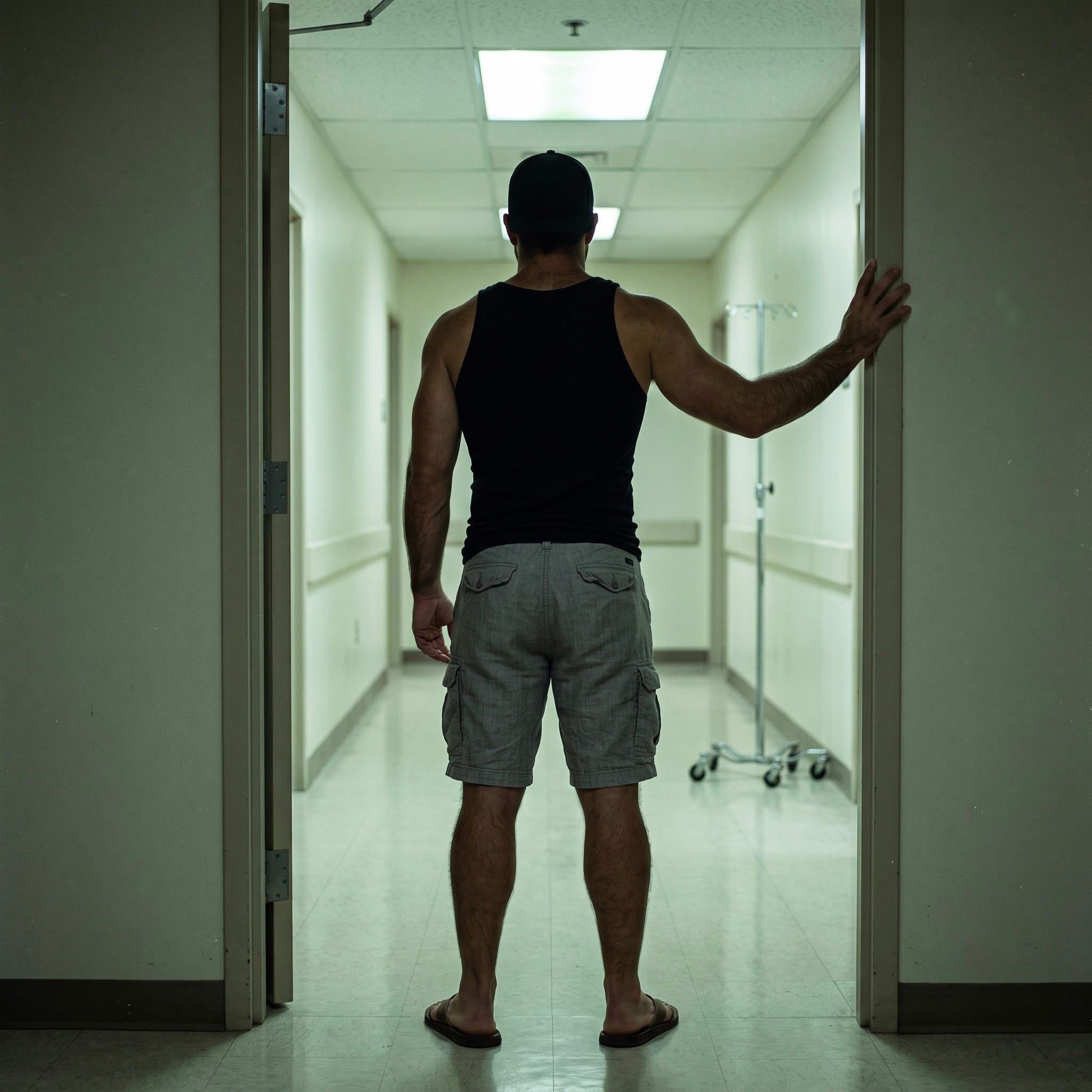
There’s a specific kind of quiet that happens right before a machine starts screaming. A held-breath quiet. I got very familiar with that quiet, because I spent two years on the wrong side of it — machines beeping, fluorescent lights that don’t know what time it is and don’t care, a version of time that stopped being made of hours and started being made of just more of the same, stacked up like firewood nobody asked for.
My organs quit. Not one at a time politely. All of them, in sequence, like someone walking down a hallway flipping light switches off room by room, unhurried, like they had nowhere to be after.
I flatlined seven times.
Say that number out loud. Seven. I have at two in the morning, more times than I’m proud of, usually right after I’ve convinced myself I’m fine and definitely not thinking about it. Seven is a lot of times to almost not exist anymore. It’s also, and I will die on this hill, an extremely dramatic number for a guy who can’t currently keep a basil plant alive.
Dr. BBM and the Six-Month Coma
Here’s where it gets embarrassing.
There was a doctor. I’m not naming him, on the advice of people who understand libel law better than I do, so we’re calling him Dr. BBM. Bad Bedside Manner. Feel free to speculate about the other thing it could stand for — I’m not confirming and I’m not denying, I’m just going to let that sit there and season the story a little.
Dr. BBM had the face of a man who was already three patients down the hall before he’d finished the sentence he was standing in. He came in, looked at me — mid-organ-failure, several flatlines deep — and said, and I have this memorized word for word because I’ve replayed it roughly ten thousand times since:
“Go home and hope for the best. We’ve done all we can do.”
That’s it. That was the whole professional opinion. Go home. Hope. Best of luck out there.
I would like to formally thank Dr. BBM for that, because nothing lights a fire under a stubborn man’s will to live quite like being told by a stranger with a clipboard that he’s already written the ending. I didn’t agree to that ending. Nobody asked me. I have never once in my life let someone else finish my sentence for me, and I certainly wasn’t about to let a man who couldn’t be bothered to remember my name write my last chapter.
Then I went into a coma for six months, so — joke’s on me a little, technically he did get the last word for a while.
Here’s the thing nobody tells you about a coma:
it’s not black. It’s not quiet. It’s garbled — a cup falling somewhere, laughter coming at you through what sounds like water, footsteps, a door, words surfacing for half a second before going back under, like a radio dial stuck between stations.
And through all of it, one voice kept cutting through clean as a bell.
Dr. BBM. Go home and hope for the best.
Not because he was still there. I have no idea if he ever checked on me again. But those six words had a clarity nothing else in that fog could touch, and something in me — low, mean, completely unimpressed — kept answering back.
Watch me.
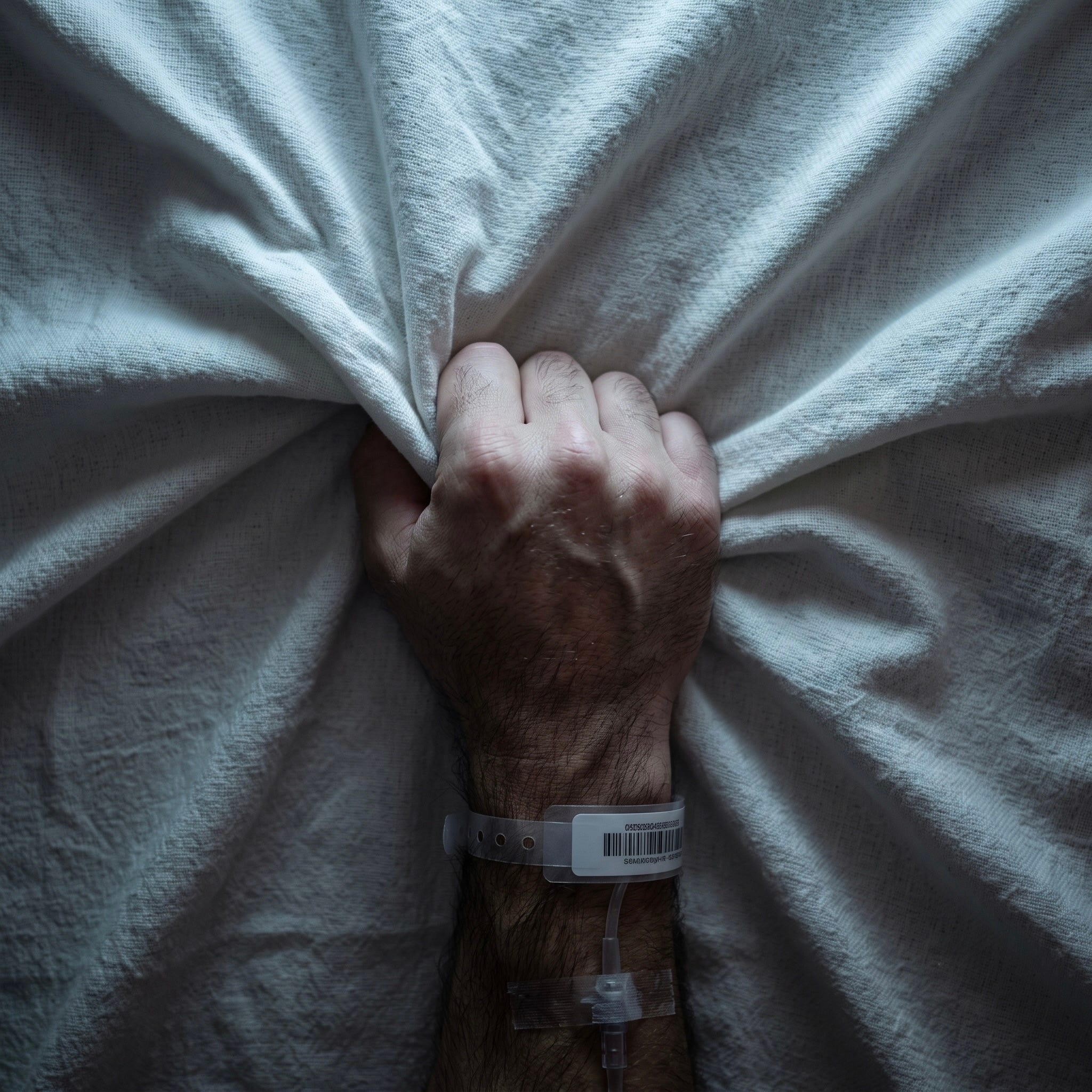
I woke up. And waking up wasn’t the finish line I thought it was — it was closer to a start line for a race I had no idea I’d signed up for.
Two years flat on your back and your body forgets things it’s done since birth. I had to relearn how to walk.
Actual physical therapy, actual parallel bars, actual toddler-level effort just to get from one end of a room to the other without falling over, at a body that used to run six miles before breakfast just because it felt like it. I had to relearn how to eat solid food, which sounds like a joke until you’re the one doing it, gagging on a piece of toast like it personally insulted you. If you don’t use it, you lose it, and I hadn’t used any of it for two years, so I lost all of it, and got to build it back one humiliating inch at a time.
The Tuesday After Surviving
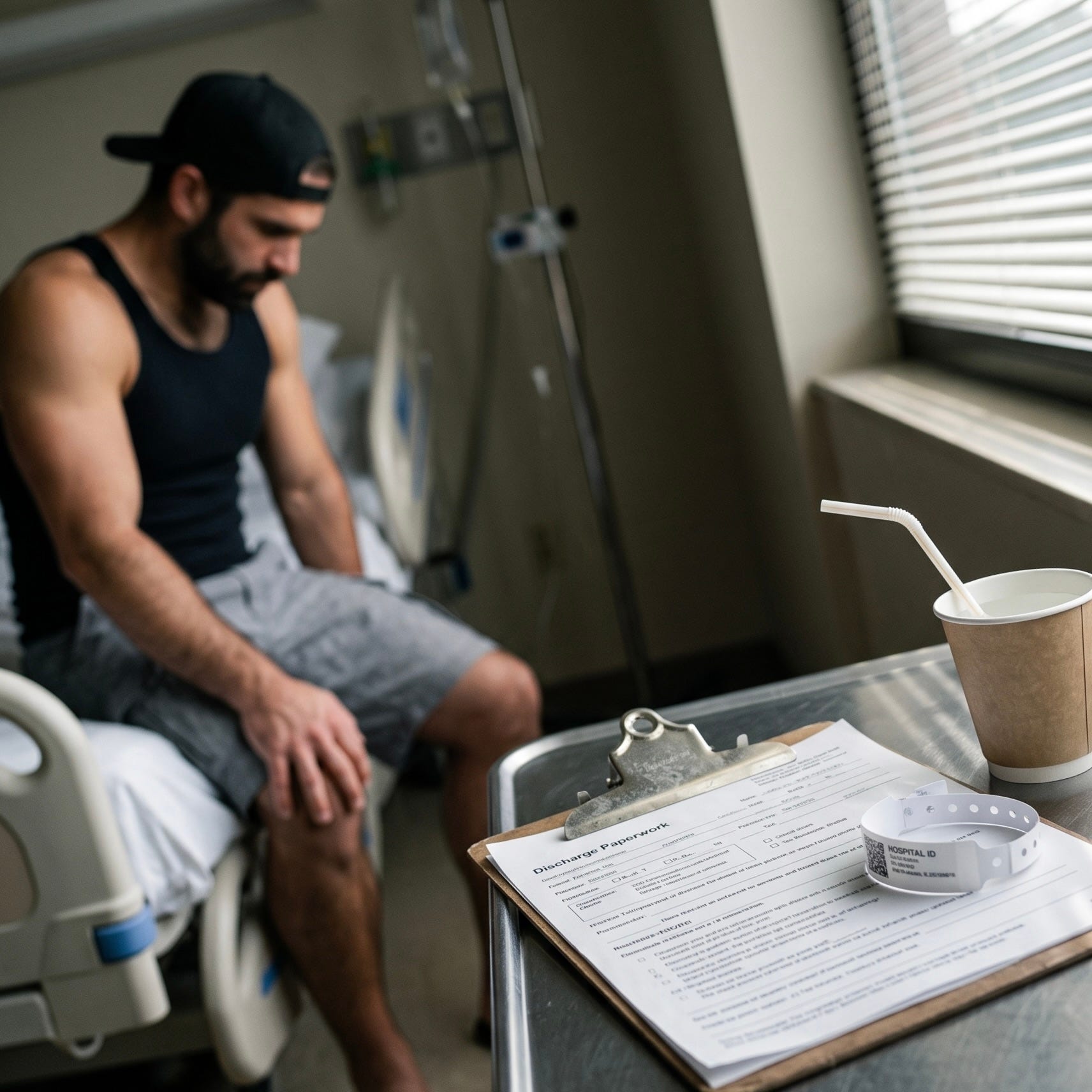
They finally discharged me. I remember the day specifically because it was a Tuesday, and I remember thinking: it’s Tuesday, and nothing is scheduled, and no one is coming to check my vitals, and I have absolutely no idea what a day is supposed to look like when it isn’t organized entirely around not dying.
The Gas Station From the Future
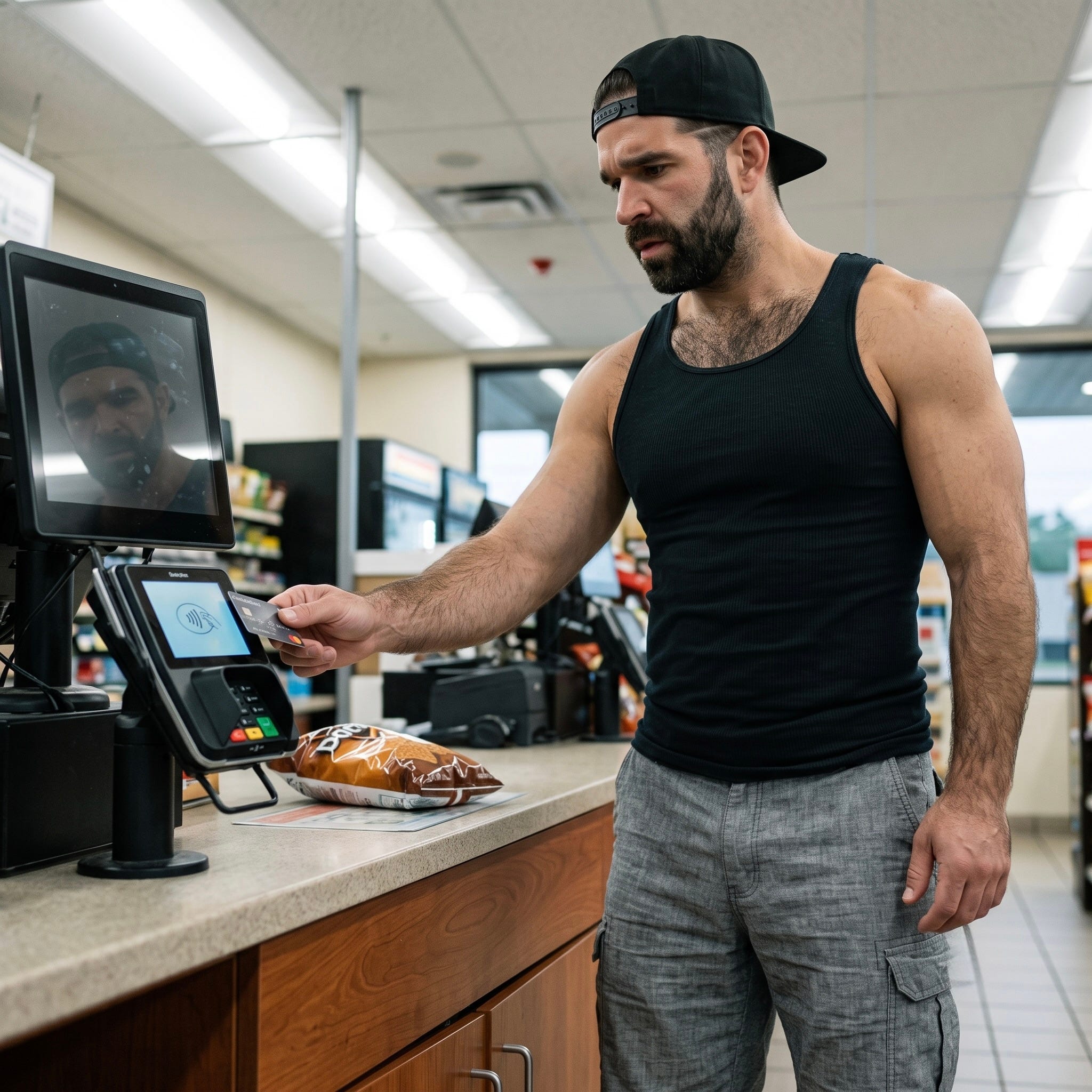
Here’s where it gets weird. My ride dropped me off, I still don’t fully trust my legs yet, and I stop at a gas station on the way home because two years in a bed will make a man desperate for a bag of chips he didn’t earn. And the whole place has changed. Not renovated — changed, like the world quietly redecorated itself while I wasn’t looking and forgot to leave a note. The card reader wants me to tap instead of swipe, and I’m standing there like an idiot holding my card six inches from a machine that’s judging me. The bathroom sink turns on by itself when I put my hands under it, which nearly gave me a second cardiac event right there in a gas station bathroom, which would’ve been a genuinely embarrassing way to go after everything I’d survived. The soap dispenses itself. The toilet flushes itself. I stood in that bathroom for a solid minute just feeling like a caveman who’d wandered into the future, deeply unsettled by a world that had kept moving without so much as checking in on me.
That’s the part nobody warns you about. Everyone’s so relieved you survived that the conversation stops right there, like survival is the finish line and not, actually, the starting gun for a much stranger race with no course markings and, apparently, sensor-activated toilets.
Fighting to stay alive and knowing how to just be alive are two completely different skill sets, and I only had one of them, and it was suddenly, uselessly, unemployed.
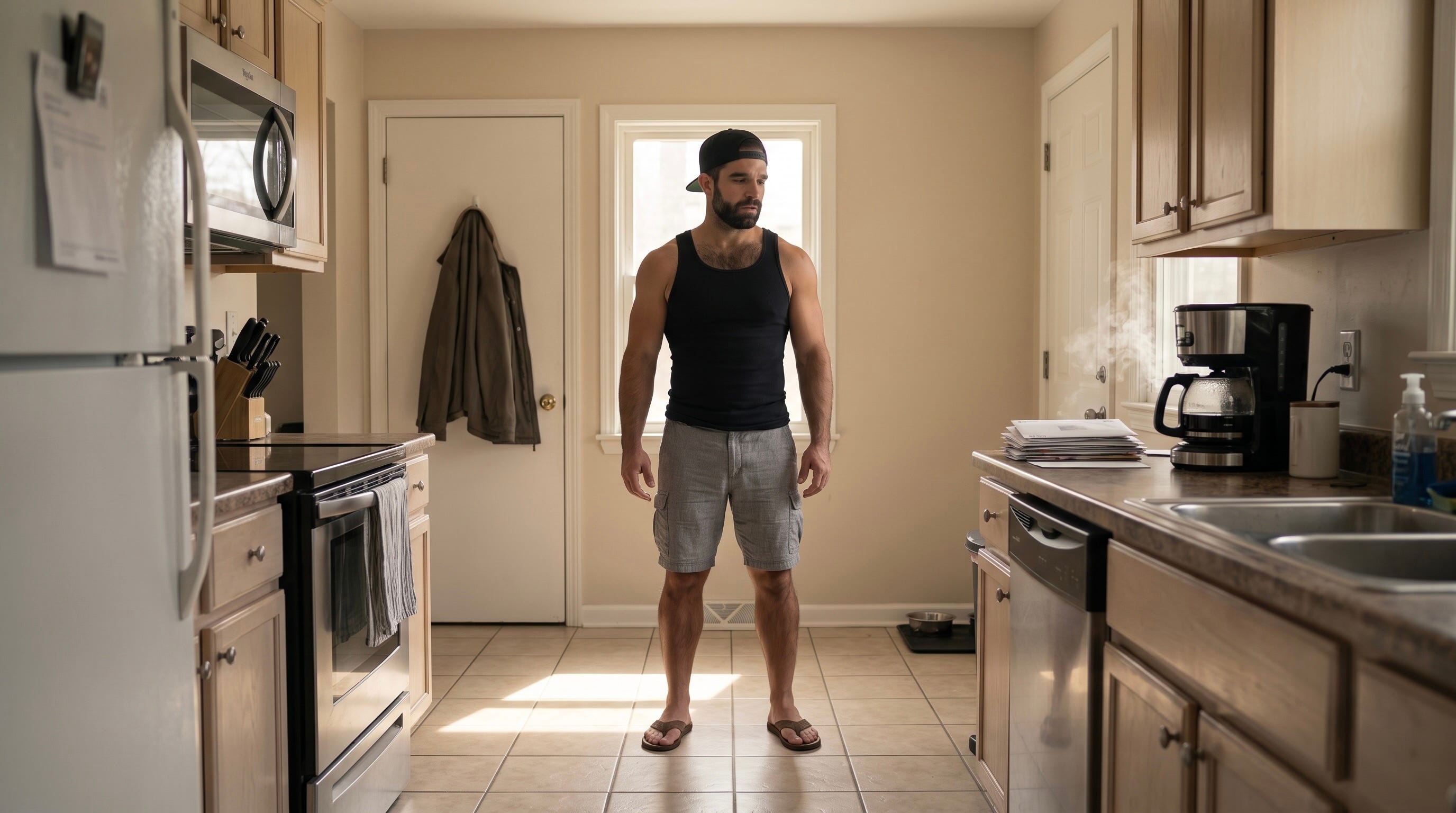
I got home. The coffee maker went off like nothing had happened. There was a coat on a hook I didn’t remember owning. Mail on the counter addressed to a version of me that had apparently kept paying bills this whole time, which, respect. My house had just continued without me — politely, patiently — and it was now standing there waiting for me to explain myself.
I did not have an explanation. I still don’t, most days, if I’m honest, which — again — is the whole exercise here.
Two years flat on your back does something else, too, that nobody mentions. It takes your social skills and quietly disassembles them while you’re not looking, same as it did your legs. I came out of that hospital an objectively worse conversationalist than I went in — slower on small talk, bad at eye contact, prone to saying the wrong thing at the wrong volume in a checkout line. Fifteen years later and I’m still a little bit that guy. The guy who reads a room about four seconds too late. I’ve made my peace with it, mostly because making peace with things is easier than getting good at them.
I tried going back to my old routine like nothing had happened. Lasted three weeks. I tried staying busy enough that the quiet couldn’t catch me, which worked right up until two a.m. on some random Wednesday when the busyness ran out and the quiet was just sitting there, arms crossed, like it had been waiting the whole time and wasn’t even mad, just disappointed. I tried talking about it with someone who made it weird within four sentences. I tried not talking about it at all, which was worse. I’m still working on the talking part. Case in point: this entire blog.
The Tomato Seed and the Dandelion
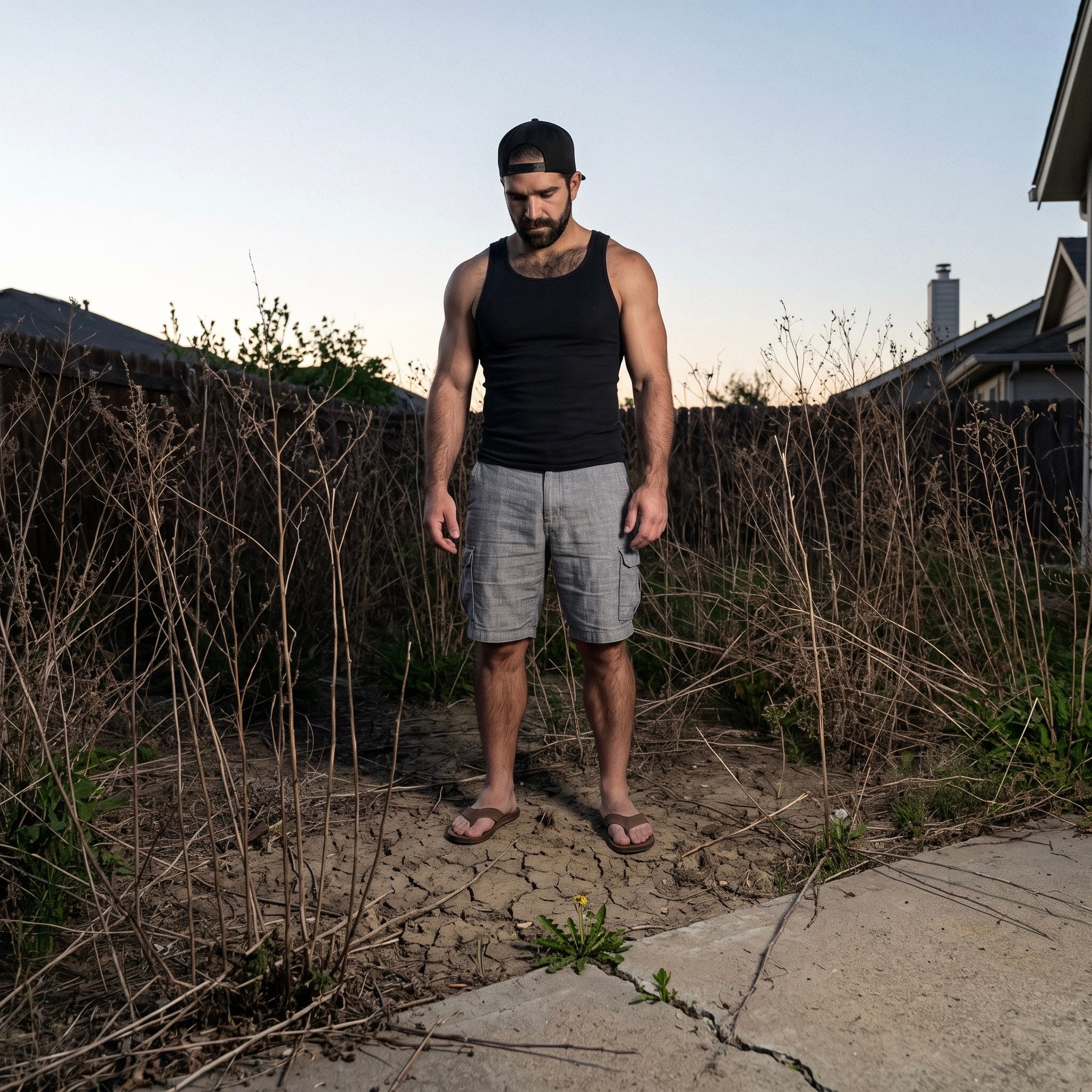
I ended up in the side yard, which — let’s be clear — was not a decision. Decisions require intention and a plan, and I had neither. I just sort of arrived there one morning with cold coffee in my hand, looking at a patch of ground nobody had touched in years. Cracked dirt. Weeds gone tall and woody, past the point of even being weeds anymore, more like small, defeated trees that had given up on the whole enterprise but were too stubborn to fall over.
And one dandelion, punching straight up through a crack in the concrete, completely unbothered, like it had somewhere to be and did not care one bit what the concrete thought about that.
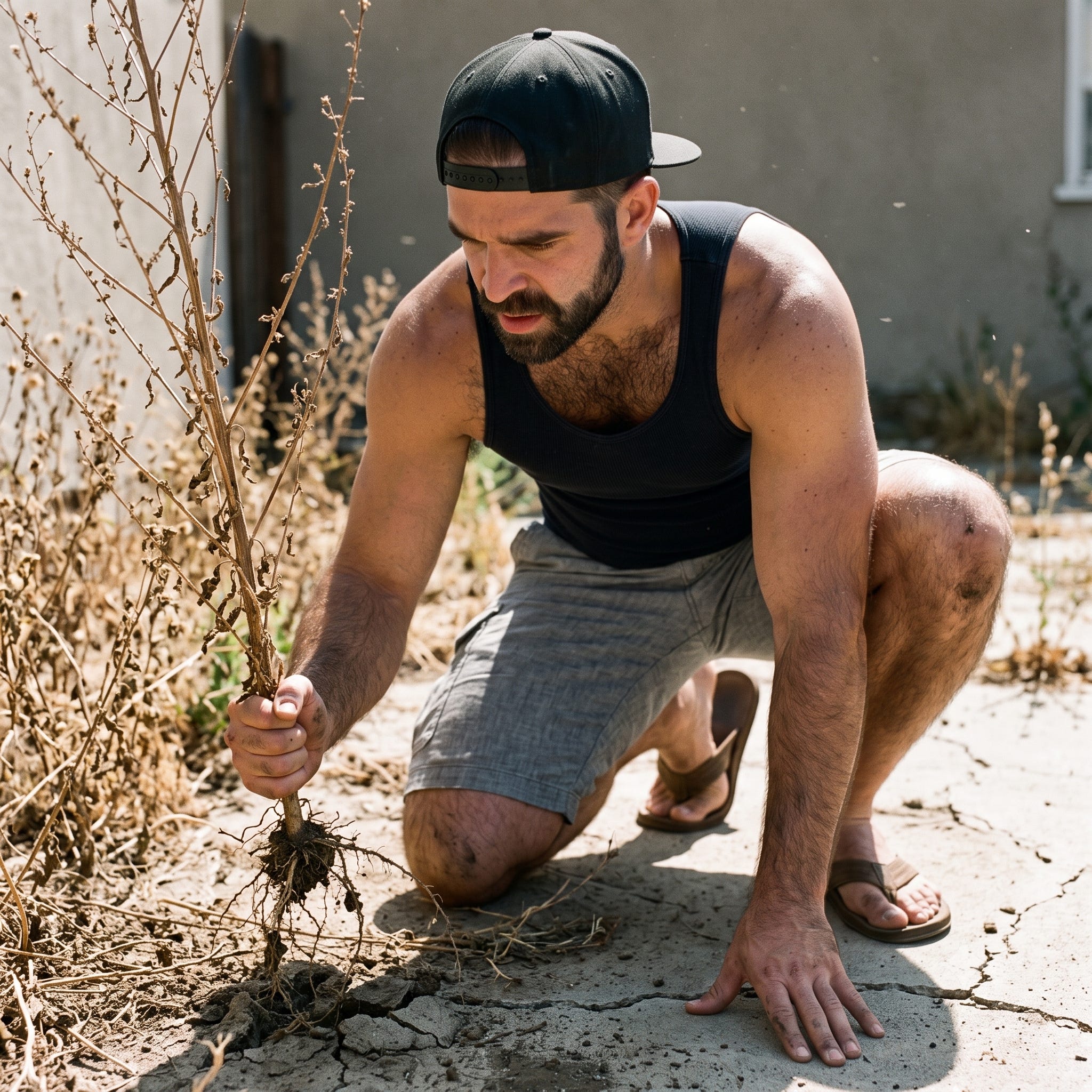
I got down on my knees, still a little unsteady, and pulled a weed. It came out clean, roots and all, that specific satisfying pop of something finally letting go of a fight it had already lost. So, I pulled another one. Then another. My hands got filthy. My knees got filthy. Coffee stone cold on the ground beside me, completely abandoned, and I did not care even slightly, which if you knew me before this is a genuinely shocking sentence.
And that’s when I found a seed packet in my jacket pocket.
I don’t have an explanation for this either. Gas station rack, hardware store impulse buys, the universe deciding to be funny at exactly the right moment — I truly don’t know. Tomato seeds. Of course it was tomatoes. I love tomatoes with the specific unearned devotion most men reserve for a football team that’s never once won anything, so, fine. Apparently, I’m a man who carries tomato seeds around in his jacket now. We’re doing this. And we’re doing it completely unqualified, because I had done zero research, made zero plans, and the soil was, by any reasonable standard, garbage.
I made a hole with one finger. Dropped the seed in. Covered it back up. Sat there looking at the ground that looked exactly the same as it had thirty seconds earlier.
And I thought: well. It’s in there now. Whatever happens next, it’s got a chance it didn’t have a minute ago.
That was the whole thought. It wasn’t profound. It didn’t come with music. It just quietly became the most okay I’d felt since coming home, and I decided, right there, with dirt under my nails and absolutely no evidence to support it, that I had personally invented hope. Nobody has successfully talked me out of that since, and I don’t expect that to change.
That was fifteen years ago. I’m still working on the talking part, the social-skills part, the trusting-that-good-things-stick-around part. Turns out you don’t graduate from any of that. You just get better dirt under your nails while you keep going.
Here’s what I actually know, after all of it. Surviving and living are not the same skill. Nobody tells you that on your way out the hospital doors — that the fighting-to-stay-alive part was, in hindsight, the easy part, and the hard part is what you do with the time you fought so hard to keep. The hard part is the Tuesday. The automatic sink. The coat you don’t remember. The yard full of dead weeds that somehow still has one stubborn dandelion in it, not asking anybody’s permission to exist.
You don’t have to know if it’s going to grow. You just have to put it in the ground.
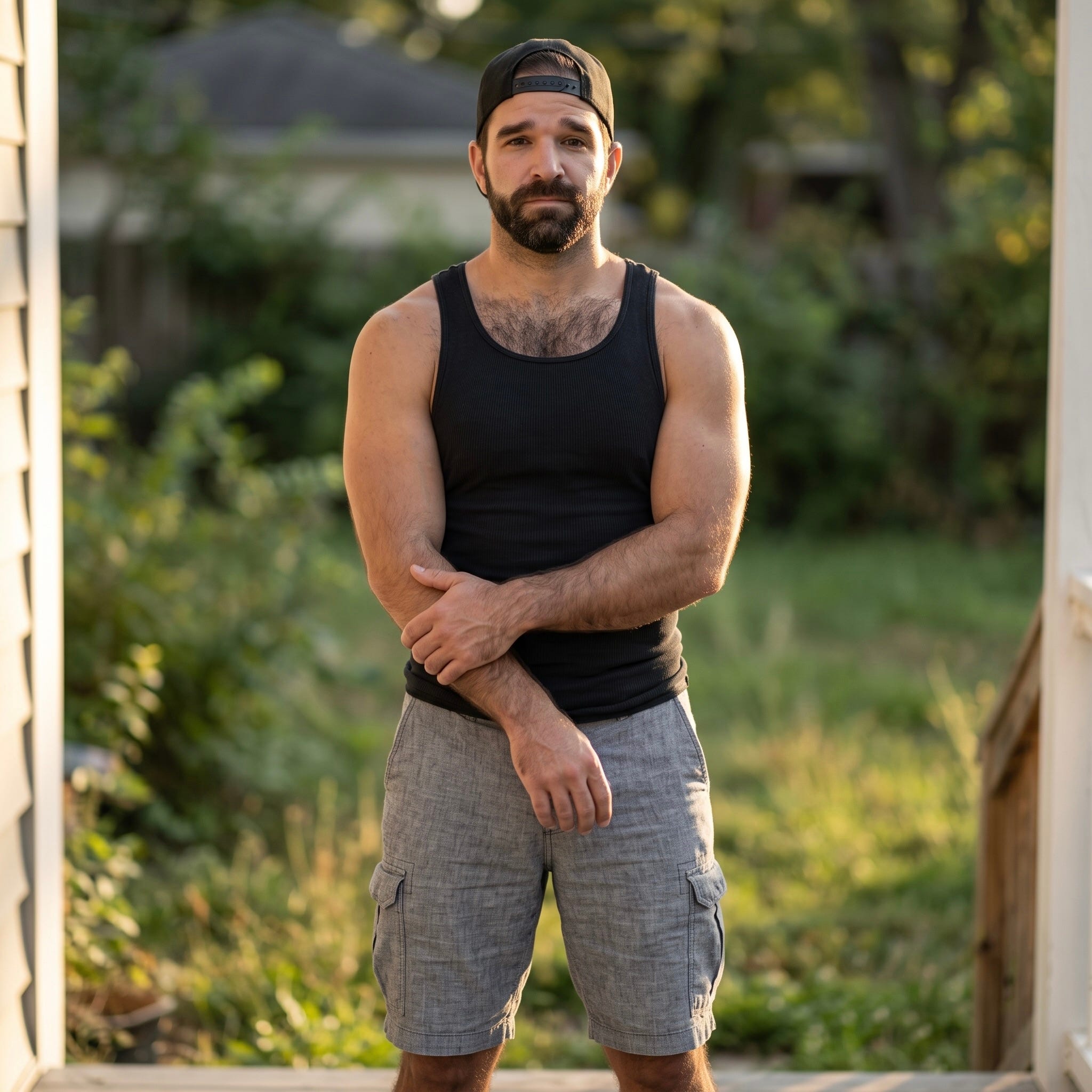
That’s the whole blog, honestly. That’s what we’re doing here, you and me, in the dirt — whatever cracked patch of ground you’re standing at the edge of right now. I’m glad you found this place. Dr. BBM decided how my story ended before I got a vote. He was wrong. He’s still wrong. I plan on being wrong about him personally, and stubbornly, gorgeously alive about it, for as long as I possibly can — mostly because I’ve never once lost an argument I refused to consider losing, and I’m not about to start with him.
The gate’s open. I’ll be out back, losing an argument with a tomato plant and somehow still winning overall. Come find me when you’re ready.
— Mitch